Showing posts with label Korean cooking. Show all posts

4.14.2013

Happy Black Day! A holiday for singles in Korea

Black Day Noodles {image source}
Happy Black Day!

What? You don't know about Black Day?

Well, let me tell you a bit. Korea is all about love. In fact, the country seems to be in love with being in love. Despite the Westernization that has occurred in the past few decades which has people marrying later and later, there is still a pervasive couples culture that exists. Being part of a couple is being part of the "in" crowd.

As a result, the country has a hysterical 13 days devoted to love! Black Day is the antithesis to February's sappy Valentine's Day and gives a shout out to all those that didn't get a fancy box of chocolates.

Black Day is when singles gather together to decry (or celebrate, depending on their situation) their singledom. They dress in black and eat black noodles called  Jjajangmyeon. In true Korean fashion, the day is a tongue-in-cheek sort holiday that's a little piteous and a little funny. It's a superficial holiday but it's likely the diners sport a little hope that while they celebrate being single this year, next year they will be celebrating couplehood.

Evidently the black bean noodles stain teeth (always attractive), are notoriously messy to eat (no one to impress anyway) and usually leave the diner's breath reeking of onions and vinegar (they are going home alone anyway).

The rest of the year's couples holidays (all of them are on the 14th, by the way) are back to celebrating couples, through food, gesture, music, photos, or even wearing the color green together and skipping through the woods.

Check out the link to learn more about those super awesome days!

And if you are single today, find yourself a big bowl of black noodles and slurp away.

*****

13 Korean Holidays For Love: http://koreabridge.net/post/black-and-blue-koreans-mend-broken-hearts-black-day-april-14-thejessicasteele

Korea's Black Day: http://blogs.smithsonianmag.com/food/2013/02/koreas-black-day-when-sad-single-people-get-together-and-eat-only-black-food/


4.04.2012

Adoption, food and culture: The story of Grandpa Chili

Just found this great video, Grandpa Chili, about an international adoptive family and how they have explored their children's birth culture and family through food. In this case, the family has two children born in Korea.

I love this family's approach to incorporating birth culture into their everyday lives. The exploration starts with a basic thing that everyone can relate to---food. But that is just the launching point, and from there they foray into Korean culture, traditions, and discussions about the children's birth families in Korea.

This is much deeper than just making Korean food together. The process itself becomes common ground. Broaching the topic of birth families is not an easy thing to do. You don't want to constantly be talking about it, but you also want your children to know that you are open to these discussions and embrace who they are and the heritage they come from.

These type of conversations seem like they would come much more naturally when you are cooking Korean food together.

I know of others who have created new traditions in their homes through food. Friend and fellow blogger Yvonne at our korean american family has Korean Saturday night dinners which have become a much loved tradition in their home.

Of course, this approach isn't for everyone.

Check out the video. What do you think? I especially find Eli's construction of Grandpa Chili to be an interesting piece of the story. I think it's great how the family embraced his idea and even documented Grandpa Chili in a story book.

Makes me want to get out there and cook!


Grandpa Chili from 2 Beets And A Head Of Kale Produ on Vimeo.


3.26.2012

Trader Joes--a hotbed of Korean adoption action

Trader Joe's seems to be a hotbed of Korean adoption action for us lately.

Maybe it's the kimchi fried rice in the freezer section? (BTW--the kimchi fried rice is excellent and very spicy. We love it fried up with scrambled eggs.) Or could it be the fresh kimchi in the refrigerated section? (We have this in our fridge now but haven't taste tested it.) And LM and I LOVE the roasted seaweed.

It's fun to see so many Korean foods making their way into mainstream stores.

So, back to the Korean adoption part....

A few weekends ago we were shopping with Little Man in tow, when a woman ran up and said "my daughter was adopted from China and my son is from South Korea. Is your son from one of those places?" Awesome! We chatted quickly and found that their son is about a month older than ours and he came home a week before us! And, we both used the exact same two agencies. Weird.

So, in the midst of the produce area we exchanged numbers. We managed to catch up for dessert a few days later and I can't tell you how much fun it was. We'll be getting the boys and the rest of the family members together again soon. Yay!

Flash forward to last week's shopping trip. Again, in the produce area (?!) a lovely woman stopped to chat with me. She has a daughter in tow, a few months younger than Little Man. She asked if my husband was Asian and then gently asked if Owen was adopted. When I said yes, he was born in South Korea, she shared that she too was adopted from South Korea and she and her husband were working on an adoption as well. They had passed their home study and were waiting for a referral when she got pregnant, so their adoption is currently on hold. They are waiting to begin the process again.

So we exchanged info as well.

Again, I am reminded how adoption has opened up our world in so many wonderful ways! Can't wait to see what happens this week at Trader Joe's.

10.27.2011

Kimchi illustration

Just found this cute Kimchi recipe/illustration by James Gulliver Hancock. For all you kimchi lovers, might be fun to try making it.

I have no idea how much of any of the ingredients to put in the kimchi, and I'm a bit confused about the process, but the illustration is cute. Maybe I'll print it out for the kitchen?


9.13.2011

Chuseok 2011

Songpyeon. © Cheese Curds and Kimchi

I patted the dough gently. Did it feel like an earlobe? With my flour-crusted fingers I gave my earlobe a quick pinch. I have no idea. But that's what the recipe says. Knead dough until it feels like earlobes.

Sometimes our adventures into Korean culture feel similar to following a new recipe. I'm not sure if I'm are doing it *right*. I only hope that after all these unfamiliar steps, the food will come out somewhat edible, and if the kitchen gods are with you, it will be good. You season to taste, adding a little more of this, a little more of that. And in the end, you have something unique to you.

I thought about that as I was making songpyeon, a traditional rice cake, for our first Chuseok celebration. Chuseok is a three-day celebration, honoring family and food. It's one of the largest holidays in Korea and can be compared to our Thanksgiving. (See THIS POST for more information about Chuseok.)

(Oh, by the way, Chuseok jal ji nae sae yo! That's the traditional greeting for Chuseok. You can also say Chuseok jal bo nae sae yo.)

Seeing as this is our first Chuseok with Little Man home, it felt important to begin the groundwork for incorporating some Korean traditions into our lives. A challenge since we've never attended a real Chuseok celebration and what we know has been gained through YouTube videos and books. So, like following a new recipe, we are "seasoning to taste" and making it uniquely ours.

Jap Chae! © Cheese Curds and Kimchi
On Sunday, the first day of Chuseok, The Man and I both had races. So the three of us spent the day together, outdoors, doing what we love. Spending time enjoying one another and the beauty of the world is absolutely going to be part of our holiday tradition.

Yesterday, I tackled another part--the food. Traditional foods are jab chae, soup, fruit, and songpyeon. I had visions of a lush spread, much like what I do with Thanksgiving, with the three of us eating until we were stuffed. Well...it was a little difficult to do a huge meal with a grumpy, teething toddler demanding my attention. Shockingly, I managed to make the jab chae and songpyeon.

I followed THIS recipe for the vegetarian jap chae. And it was freaking incredible. Seriously. Like, I-can't-believe-I-actually-made-this good. I omitted the bed pepper and substituted bean thread noodles for the potato starch noodles. I also used reduced-sodium soy sauce, and used less than called for. It was a huge hit and next time I will double the recipe. There wasn't a noodle left over when we finished.

I loved making the songpyeon! They say that you can't have Chuseok without them. The hardest thing about making these was 1) figuring out what ear lobes feel like, and 2) stealing finding the pine needles to steam the dumplings on. Turns out that the local telephone company building had plenty of the right sort of pine trees, with branches that hung over the road. (That makes them public property, doesn't it?) I couldn't taste any added flavor from the pine needles, but ours seemed a bit dried out. Maybe I need a new pine needle source.

Filling the songpyeon. © Cheese Curds and Kimchi
Rice cakes in their steam bath atop the pine needles. © Cheese Curds and Kimchi
I followed THIS recipe (and handy video). I substituted regular rice flour for the frozen, so I just added more water when mixing it. I did make two types of filling, a sesame and a red bean, but the red bean was sort of messy and I liked the sweeter sesame filling much better. It's traditional to make five colors of songpyeon representing the five basic elements that make up our universe, but this mommy only had time to make two. (See the link below for a brief explanation of songpyeon and why they are shaped in half-moons and cooked on pine needles.)

After all that cooking (which is exactly what most Korean mothers do on this holiday!) we sat down to enjoy our meal. It wasn't exactly like I had envisioned. The Man got home from work a bit late. Which meant the noodles weren't hot. And when we sat down to eat, Little Man was screaming his head off. He ate a few mouthfuls of noodles and wasn't interested in the songpyeon. So, we wolfed down our dinner and rushed him off to bath and an early bedtime. Which suited him just fine.

The third component of the holiday is honoring family and ancestors. Traditionally, you would visit your parents home (specifically the husband's parents), and visit the graves of family members. This is where I start to get a bit lonely. Our family is on the west coast, and we are so far away. I miss being able to spend time with them.

I haven't figured out just what we'll do tonight to honor our family and ancestors. We do believe in acknowledging that much of who we are has been forged from the experiences and lives of those who came before us. And, it's good to stay connected to the memory of family members who have already passed.

So that was our first Chuseok! We do have one more  celebration to go--in early Oct. our Korean adoption group will be gathering together for our annual party. Can't wait! When we went last year, our home study had just gone to Korea and I remember watching all those adorable children, many in their hanboks, running and playing and hoping that one day we would see our son among them. And this year, we will! 


How Chuseok is Changing {WSJ}

Chuseok: Korea's Harvest Thanksgiving Holiday {Seoul Eats}

No Chuseok without Songpyeon 

Chuseok exodus begins {The Korean Times}

Chuseok traditions {EzineMark.com}


6.09.2011

GamJa JoRim 감자 조림 & DuBu BuChim 두부 부침

© Cheese Curds and Kimchi
Korean dinner night! I have been inspired by Yvonne at Our Korean American Family's Korean Saturday Night dinners. And finally managed some time to cook while the Wild Man played quietly. (Did I actually say quietly???) Miracle!

First, the GamJa JoRim. I love me some potatoes, and that goes ditto for The Man. I followed THIS VIDEO from Aeri's Kitchen. I altered the recipe slightly, adding in about 1/2 cup sweet potatoes, and a little more corn syrup. Yum. Seriously. And quick to make.

Next, another Aeri's Kitchen recipe (I love her stuff!). For the Tofu BuChim, I actually used Quorn breasts instead. The recipe for the BuChim sauce is HERE. I didn't have red pepper powder on hand so I substituted Penzey's Black and Red spice instead, using about 1 tbsp.

The entire meal only took about 1/2 hour to make, and was easy to do. Hoping to work some of this stuff into our daily routine, but I'm not up to Yvonne's Saturday night feasts yet!


© Cheese Curds and Kimchi

2.03.2011

Happy Korean New Year!

Greeting cards, available at Mandy's Moon
Hooray! Today is the first day of Korean New Year. I hope the Year of the Rabbit has many good things in store for all of us.

Have I told you how much I love the Korean holidays? So many of them seem to be centered around family and paying honor to elders. I think that's just the coolest thing. Here's a few traditions about the holiday that are especially nice:

  • Commonly known as the lunar new year, or Seolnal in Korea, the holiday lasts for three days. 
  • There are many superstitions regarding this holiday. Some Korean people keep rakes or straw scoopers at the entrance to their home to keep their family safe from evil. Many believe that being awake and welcoming the New Year will lead to a bright, healthy and happy life and prevent premature aging. Some ring a gong or loud drums, performing the ritual Jishin Balpgi to ward off evil spirits. And some believe in the power of drinking kkwi balki sol may protect the drinker from overhearing malicious gossip, and give them the ability to accept wise advice. (I'm going to start searching for this right away!)
  • People often purchase new clothes especially for Seolnal, including traditional hanboks, to start the new year off fresh. (I wonder if a new outfit from J. Crew will count?)
  • The family gathers together to perform ancestral rites, commemorating and showing respect for those that went before them. This is my favorite part. I love thinking about those that came before us, and knowing that our futures were shaped by those in the past.
  • The New Year's meal includes a soup called tteokguk, made of beef broth, and tteok, chewy rice cakes. (Not so into the beefy broth stuff, but the rice cakes sound great.)
  • Following the meal, younger children bow (saebae) to their elders and pay their respects. Elders offer blessings and give the children money as a gift. (To learn how to perform a proper saebae, go HERE.)
  • Games are also a big part of the celebrations. Go HERE to learn how to play some!

Wishes of peace, happiness and prosperity to you all!

You can learn plenty about the holiday HERE, HERE and HERE.

9.21.2010

Happy Chuseok (Hangawi)


There's something to love about traditions. I'm a bit old fashioned this way. I find traditions and rituals very comforting.

I often wonder what, if any, rituals we might include from our child's culture into our lives. The Man and I have co-opted other rituals and traditions from other places and made them our own, so it makes sense to us to add in a few from the birth country of our child too.

Chuseok seems like one of those rituals that was tailor-made for us. It's spiritual without being religious. Pays homage to the past while acknowledging the gifts of the present. It's about family and celebrating your ancestors. And certainly the fact that it centers around food and thankfulness are key elements that appeal to us.

Here is where my knowledge of this Korean tradition gets a bit bookwormish. I've read all about this holiday via the world wide interweb, but that's it. Hopefully one day we can celebrate this lovely holiday with someone who has actually experienced it first hand.

Chuseok is the Korean version of Thanksgiving and the nation's biggest holiday. Most people make a pilgrimage to their home towns and families celebrate this time together. This year's celebration is September 21-23 and according to the Korea Times, every bus, plane and train out of Seoul is sold out!

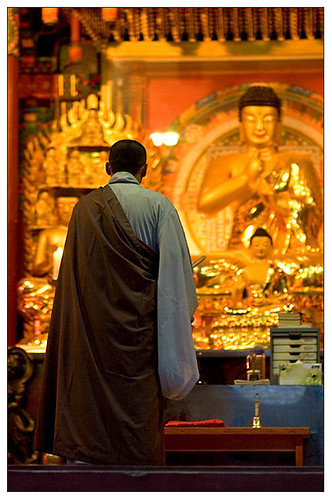
Evening Prayers
image from flickr/bhophoto
At the very center of this holiday is family. Koreans were traditionally agrarian and this was a time to thank their ancestors for bountiful fall harvests and share their riches with family and friends. Traditional activities are to visit the graves of the family's departed and maintain the grave sites; holding memorial services for ancestors; playing games including Korean wrestling; and for the head of the household to buy everyone a new outfit.

A blogger at Seoul Eats describes the holiday like this:
"Chuseok is the Korean version of Thanksgiving. During this holiday, the family gives thanks to their ancestors by welcoming the spirits into their houses to taste the ethereal flavors of the year's harvest. This may sound superstitious, but the real intention is to commemorate the departed. Because without our ancestors, literally, we wouldn’t exist. This is a family holiday and to be invited to a family's Chuseok celebration is a very special honor. Basically, the family is accepting the guest into their family to not only meet the living relatives that attend, but also the spirits that have passed."
Be sure to read the rest of the excellent post which describes the traditions of one family regarding food preparation and presentation. (Interesting trivia fact: foods are prepared somewhat blander than typical--without strong flavors of garlic or chili pepper common in Korean foods--which are believed to offend the ancestors.) Foods are placed in a prescribed manner on a low table for the departed. Here's a description of the ceremony:
"The ceremony is a beautiful progression to behold and one that has significance needs explanation to be understood. Koreans believe their ancestors live a mirrored existence, so the table settings of the rice bowl, soup, and chopsticks and spoon are the opposite from the living. The first pouring of rice wine is to welcome the ancestor into their home, the second pour is to say, "enjoy the food" and the third is to say good-bye and to go in peace. During the ceremony no living creature is allowed to be killed because- not even a fly- because it could be the spirit of the ancestor that has arrived to enjoy the meal. Koreans believe their ancestors will devour the spirit of the food but could be offended by strong flavors, so the feast is prepared as simply and naturally as possible. Everything red on the table is to the west and everything white to the east. The tops of the fruit is pared off on the end so the visiting ancestors can easily enjoy the food."

Special foods are often prepared, including the most traditional item, songpyeon (rice cake). Check out Maangchi's blog post for excellent directions on making this! More details about the foods traditionally eaten at Chuseok are found here at One Fork, One Spoon.

All of this sounds quite amazing. It makes me start to think what type of Chuseok ritual we can create for our family?

--------------------
LINKAGE!
AsiaOne News: Men doing bigger share of Chuseok Chores (so many comments I could make here..)
Ask a Korean: How to hold jesa (a memorial ceremony for the dead)
Visit Korea: Chuseok-Korean Thanksgiving Day (history, traditions and food)
Korean Class 101: Korean Culture Class-Chuseok

8.03.2010

Tasty Tofu! Thanks Maangchi!

Dubu Ganjang Jorim / © Cheese Curds and Kimchi
Just a quick post to tell you how freaking good this recipe is!

Tonight we had another Korean dish--dubu ganjang jorim (also known as panfried tofu in soy sauce). It cooks up super fast, about 20 minutes start to finish. One minor setback--the sesame seeds were supposed to be lightly toasted but they came out looking like bits of pepper. We had dubu sans sesame.

You can see the recipe HERE at this super fabulous Korean cooking site
www.maangchi.com. Maangchi is just an everyday gal like us, who happened to like to cook. She started doing YouTube videos of her cooking, and tapped into a niche. Whole bunches of people were interested in learning Korean cooking. So she started a blog and posts recipes, videos, a Korean grocery store directory, explanations of Korean ingredients, and the list goes on and on! It's well worth a click to get over there and look around.

One last thing to look at--click HERE to go to Maangchi's shop. She has some recipe/cooking apps for iPads, podcasts, and recipe books for sale at Amazon.

And to make her site even more kick ass, she has those same recipe books available as ebooks for FREE! Yep, she's make this kimchi mama very happy!

For our meal, we had dubu (doo boo) with rice and an Asian-styled pickled asparagus. Super yum!

Come on. A whole world of wonderfulness awaits you. You know you wanna try it. So what's it gonna be?

7.27.2010

Yum yum gimme some

Just a quick post to highlight this great Korean cooking blog we just discovered, Aeri's Kitchen. After just a brief digging around, we've already found half a dozen recipes that we'd like to try.

The recipes look easy to follow and are broken down by categories such as vegetarian, soups & stews, and dessert, so it's easy to find what you are looking for.

She gives short Korean word lessons with each recipe, which I love. What isn't as easy is trying to pronounce them correctly...

And some of the recipes even have video tutorials!

One thing you might also be interested in is the free cookbook ebook download that has more tempting recipes to try.

Hoping to try out this recipe for  DoBu JoRim (Fried tofu side dish) this weekend!


(image credit: Aeri's Kitchen

5.25.2010

I can do mandoo!


A few days ago I figured I would dive in on learning how to cook some Korean dishes (see the post here).  What took me so long to try this? OMG--seriously think it was one of the best dishes I've ever made and the Hubster gave them 2 thumbs up.

I looked at several recipes and made my own. The Kimchibulgogi.com site was a great resource if you are thinking of trying this too. It takes several hours to make, which is mostly lots of chopping and prep work. You could easily do all the prep a day ahead.

There was only one snag in my first try at making these. I only have a metal steamer, so the bottoms of the dumplings stuck to the steamer tray--I think if I used a bamboo steaming screen that would have worked better. I ended up lightly frying them and then doing a steam which seemed to be perfect!

So here's my recipe--

1 cake tofu
8 oz kimchi - chopped
3 garlic cloves - minced
1 1/2 tbsp toasted sesame seeds
2 scallions - chopped
3/4 cup bean sprouts - blanched & chopped
2 oz. glass or cellophane noodles - soaked & chopped (about the length of grain of rice)
1/2 tsp. black pepper
1 tsp salt
1 egg white
2 tsp. sesame oil
2 tbsp. soy sauce
2 packages mandoo wrappers (or Japanese gyoza or Chinese wonton wrappers)


Wrap the tofu in a cheesecloth or towel and squeeze water out. Crumble tofu into a large bowl. Add all the remaining ingredients. Mix well.


Lay out mandoo wrappers and spoon in a tablespoon of the mixture. Don't overfill them or they won't seal well. Wet a finger with water and moisten 2 sides of the wrapper. Fold the wrapper in half and press the edges to seal. I folded them on the bias to make triangles which seemed to work better. Then wrap the two outside points to the center point and squeeze tight.


Put a tiny bit of olive oil into a pan and get the pan nice and hot. Put in the mandoo (don't let them touch one another) and brown both sides lightly. Then add 2-3 tbsp. of water and put a lid on the pan. Let the mandoo steam for 2 minutes.

Eat!

I served them with a light soy sauce dip. Here's the recipe for that.

3 tbsp soy sauce
2 tbsp rice vinegar
1/2 tsp. sesame oil
1 tsp minced vinegar garlic


5.18.2010

Let's get something cooking

Thinking about trying my hand at making a traditional Korean dish this weekend! I love cooking although I haven't done much in the Asian genre. I'm super excited to try this and hopefully it will be edible too.

The lead contender for my debut meal is (cue trumpets and large fanfare here) dumplings (AKA Mandu or mandoo). 

I've found a few recipes that look promising. I think I'm probably going to try to merge this recipe with this one. This site is also a good reference. I'm wondering if maybe I should start with something a bit simpler. But then again, why not just dive in?

Have any of you tried cooking Korean cuisine? What did you try? What worked? Have you found any reliable sites with cooking tips?

(photo credit: Getty Images by Jeannie Choe)